Headway's $9.99 fee makes your booking link matter
Who pays, which bookings are exempt, and four more developments worth your attention.
Headway's $9.99 fee makes your booking link matter.
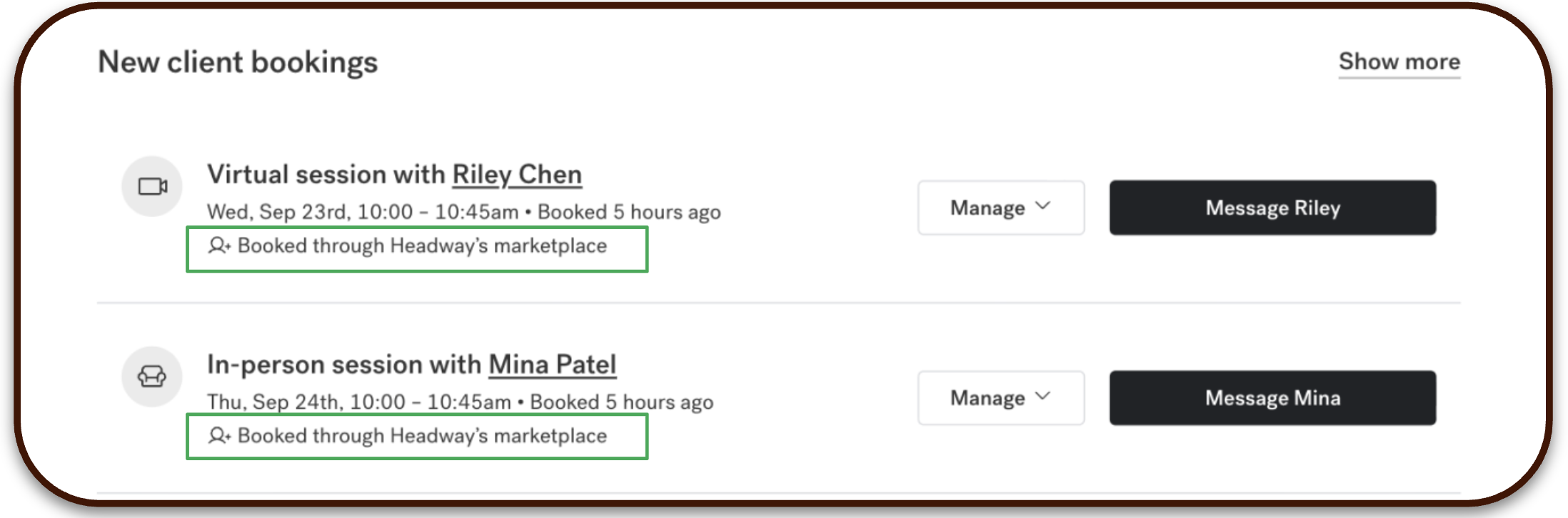
A referral fee that keeps returning changes the maths of acquiring a client. Headway is introducing a US$9.99 deduction on every completed appointment with new marketplace-sourced clients, for the duration of their care.
The rollout starts October 8 in Virginia, Washington, Georgia, Ohio and Illinois; other states follow in 2026. Existing clients and people who book through your own direct link are exempt. Check your primary practice state's start date.
For illustration, 20 affected clients completing 26 appointments each would mean US$5,194.80 in fees. That is a scenario, not a forecast for your practice.
My takeaway: know which channels bring people to you, and make your own booking route easy to find. Read Headway's fee details.
Do this now:
- Use the direct link from your Headway Profile settings on your website and directory profiles.
- Check how new bookings are attributed before estimating your exposure.
- Review marketplace settings against the value of the referrals you receive.
Google wants a human check before AI copy goes live.

Google does not penalise content simply because it was created with AI. Its focus is useful, reliable content, however it is produced. On October 1, Google updated its guidance to stress manual fact-checking and review for accuracy and trustworthiness before publication.
That includes page titles, descriptions, image descriptions and the structured information supplied to search engines. A polished paragraph does not fix a wrong credential, an unsupported treatment claim or an inaccurate location elsewhere on the page.
AI can help write your practice website. Someone who understands your services should check what it actually says. Mass-producing pages without adding value can still violate Google's spam policies, whether AI is involved or not. Read Google's guidance.
Do this now:
- Choose one recently published page and check its factual claims against your practice's records.
- Have a qualified clinician review clinical statements before publication.
- Ask your website provider to include search descriptions and structured data in the review.
California narrows tracking lawsuits. Keep checking your website.
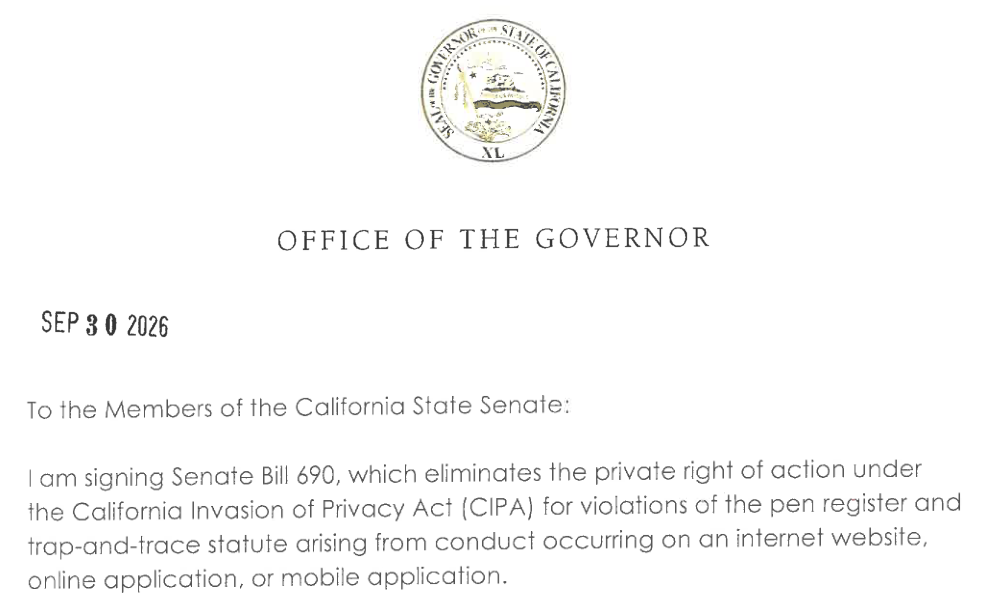
A change in California privacy litigation is easy to overread. Governor Newsom signed SB 690 on September 30, limiting private lawsuits over the pen-register and trap-and-trace provisions of the California Invasion of Privacy Act when the conduct occurs on websites or apps.
The change is narrower than a general permission to track visitors. The governor's signing notice expressly acknowledges that other parts of the statute remain. An October 6 legal analysis also explains that Attorney General enforcement and other privacy claims remain possible.
For therapy practices, the practical question remains what each website tool collects and where it sends that information. Keep your tracking inventory and review process current. A headline about fewer lawsuits is not a reason to add advertising pixels to sensitive pages. Read the signing notice and scope analysis.
Do this now:
- Ask for a current list of analytics, advertising and chat tools installed on your website.
- Check whether forms, booking routes or page details reach third parties.
- Have your privacy adviser assess your actual setup before changing consent or tracking settings.
A health cybersecurity bill advances. Test your downtime plan.
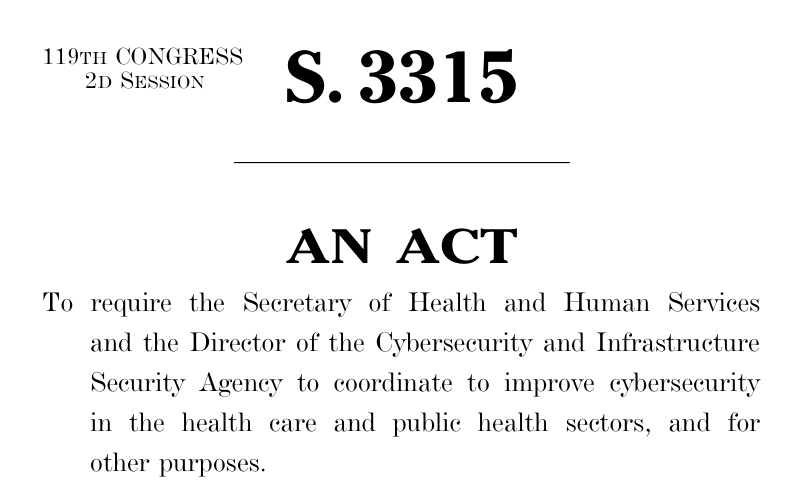
The US Senate passed the Health Care Cybersecurity and Resiliency Act on September 30. The Senate-passed text proposes closer coordination between health and cybersecurity agencies, training for health organisations and guidance for rural providers.
Senate passage alone does not create a new compliance deadline for your practice. The useful signal is the attention being paid to keeping care running when technology fails.
My practical suggestion is to walk through one ordinary disruption: your scheduling or records system is unavailable tomorrow morning. Who contacts the vendor? How does the team coordinate? Which approved backup process supports continuity without exposing confidential information? Work through that with the people responsible for your practice's operations and security. Read the Senate-passed text.
Do this now:
- Confirm who owns your incident-response and downtime procedures.
- Check that vendor support and internal escalation contacts are current.
- Rehearse the approved downtime workflow without copying client information into personal tools.
Explain what human care adds, without dismissing AI users.
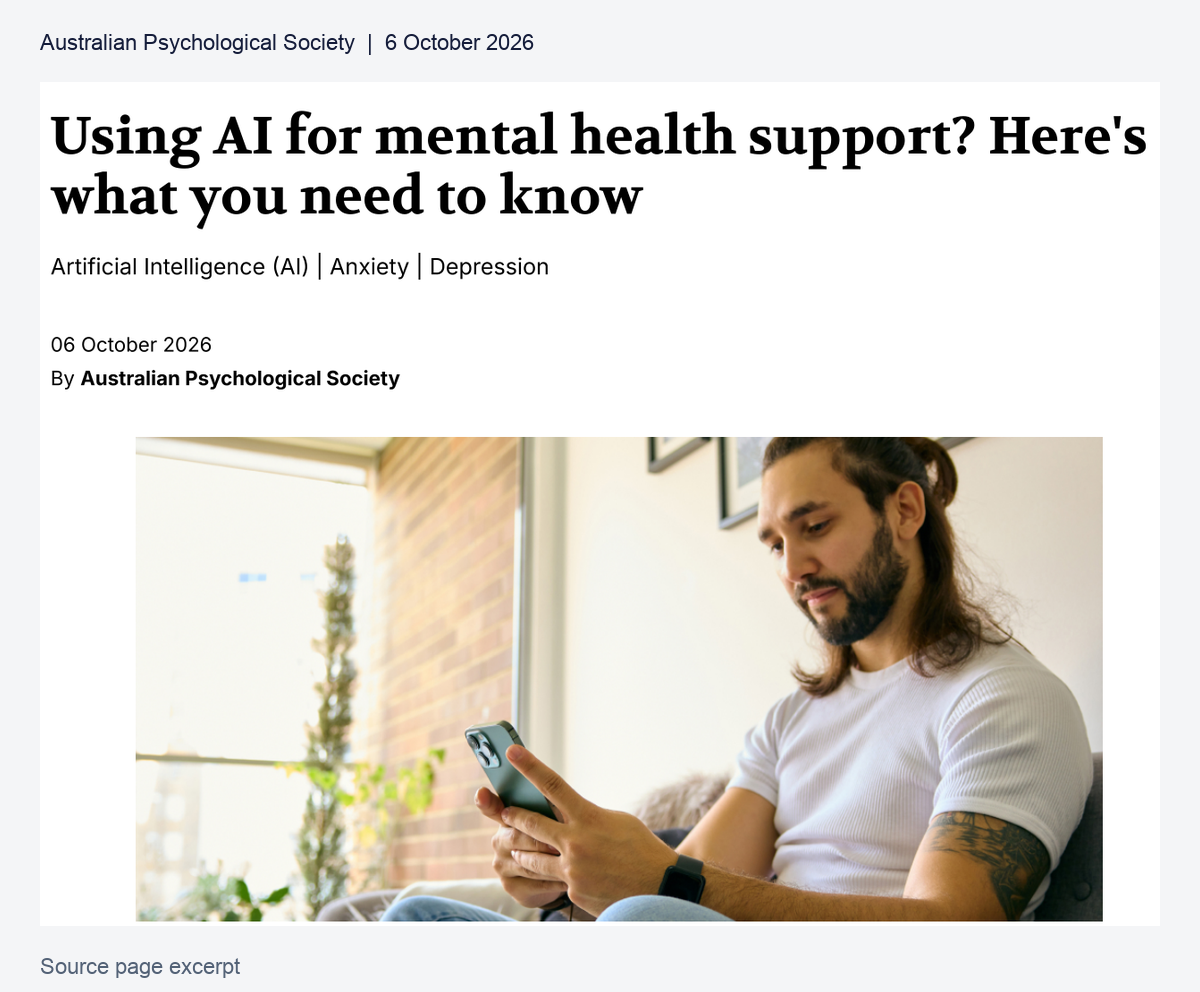
On October 6, the Australian Psychological Society published advice for people using AI for mental health support. It acknowledges why these tools appeal while explaining the limits of generic responses, the importance of clinical judgment and questions about privacy.
For a practice website, that is a useful prompt to explain your work more clearly. What does a first appointment involve? How do you understand someone's circumstances? How do you decide what support fits them? Those are more helpful answers than simply calling your approach personalised.
My suggestion is a short, clinician-reviewed explanation that welcomes questions about AI use. Keep the tone open and avoid promising that a chatbot prompt can make mental health advice safe. Read the APS article.
Do this now:
- Explain the assessment and ongoing judgment involved in your service in plain language.
- Invite questions about AI use without asking people to disclose sensitive details through a public form.
- Have your clinical lead review any AI-related education before publishing it.
Quick wins for the week
- Open your website on a phone and follow the booking button to its final destination.
- Check that one service page clearly states who you help, where you work and what happens next.
- Choose one current website task and assign a person and a completion date.
Final thoughts
This week's Headway announcement puts a price on a question I think every practice should be able to answer: how do people find you, and what does that route cost? The value of your website includes giving people a clear way to reach your practice directly.
Google's updated guidance and the APS article point to another responsibility: make your expertise visible in accurate, useful explanations. AI can help prepare a draft, but someone who understands your work needs to stand behind it.
The privacy and cybersecurity stories are a reminder to read beyond the headline. A narrower lawsuit provision does not settle every tracking question, and a Senate vote is not a new deadline. Know what your tools do, who reviews them and how your practice continues when one stops working.
If you do one thing this week, follow a prospective client's route from your website to booking. Check what they see, where they go and who is responsible at each step.
Put this into practice
Use these guides to turn the story into a useful next step for your practice.
Get the next edition in your inbox
One email a week on Google, AI search, and running a visible therapy practice. No fluff, unsubscribe anytime.