Google's spam update is done. Here's what to check now
Plus: ChatGPT ads, a vetoed AI bill, and new rules for recording calls
A free 45 minute course to fix your therapy website
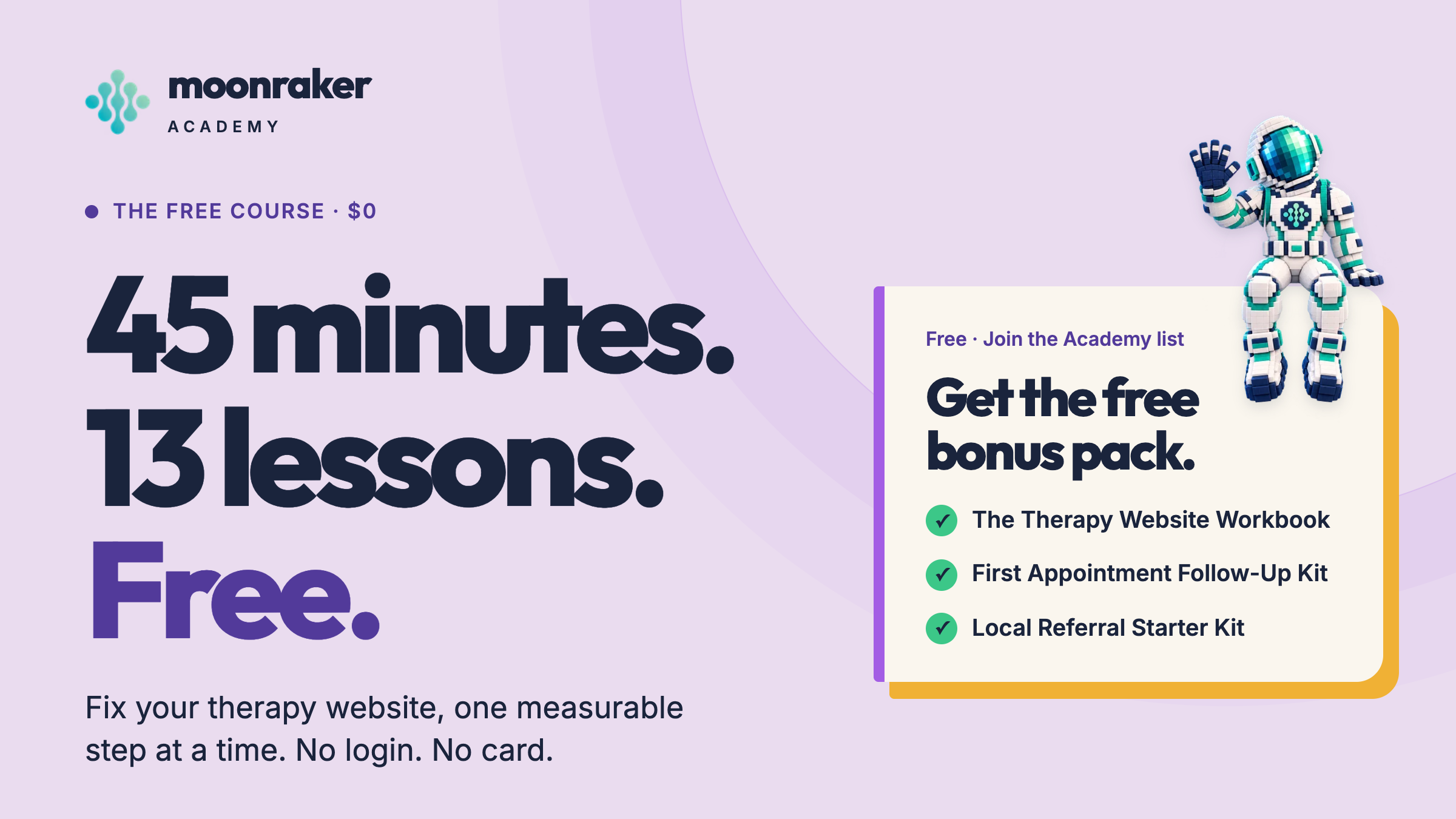
Moonraker Academy launched today: 13 short video lessons, 45 minutes total, none longer than six minutes. The course walks through four steps in order: connect Google's tools, fix one service page, fix the homepage, then measure what actually changed. Each lesson comes with a one-page worksheet, and there is no login or card required to start.
This order matters. Most practice owners rewrite their whole site first, then have no way to tell if it helped. Join the Academy list and you get a free bonus pack immediately: The Therapy Website Workbook, a First Appointment Follow-Up Kit, and a Local Referral Starter Kit. The welcome email comes from scott@moonrakeracademy.com, so check your spam folder if it does not arrive within a few minutes.
Do this now:
- Visit moonrakeracademy.com and start lesson one today.
- Check your spam folder for an email from scott@moonrakeracademy.com after signing up.
- Complete the four steps in order before making any other website changes this month.
ChatGPT is bringing ads, but not into sensitive conversations
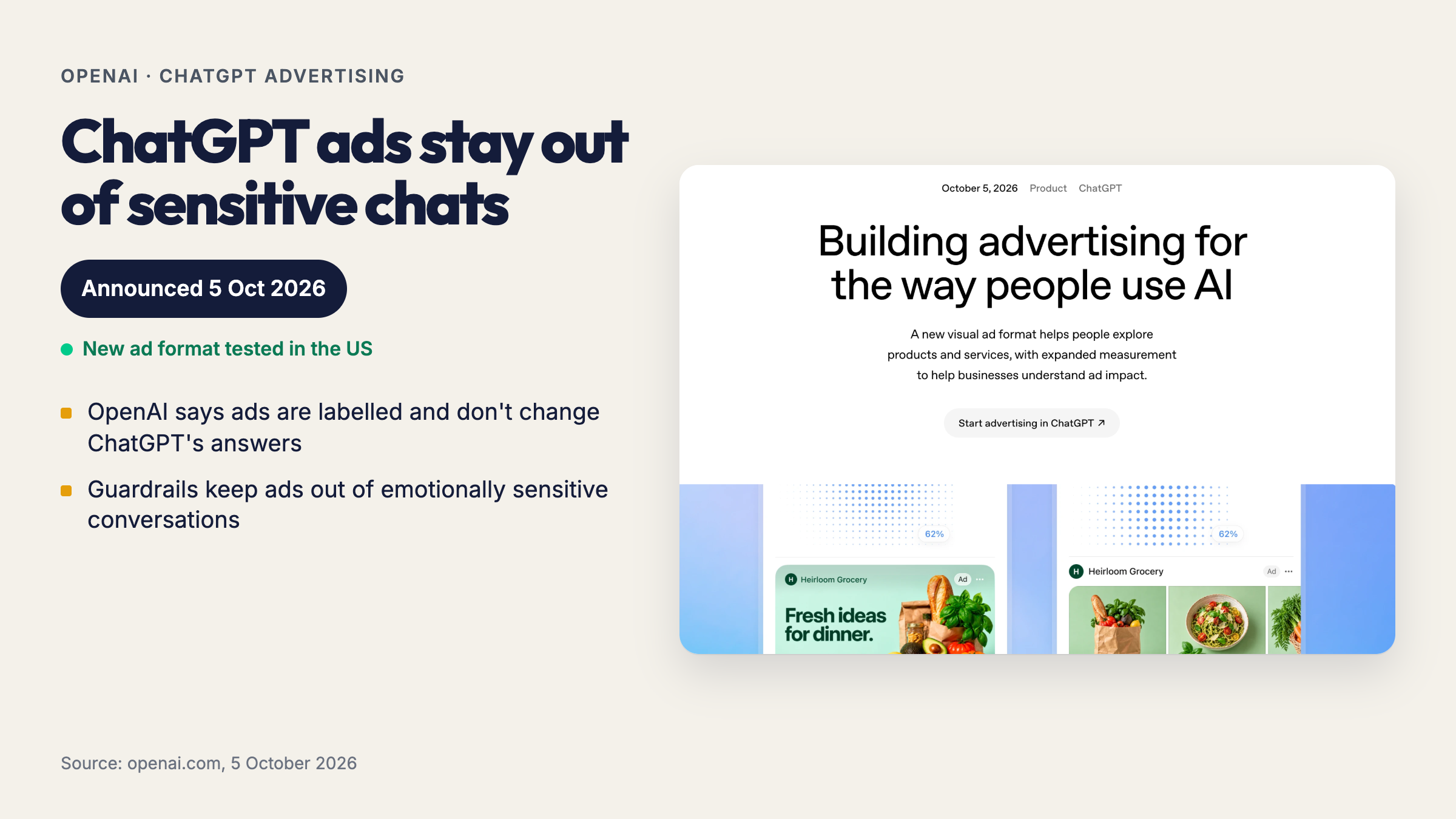
On 5 October 2026, OpenAI announced a new visual ad format inside ChatGPT, starting testing later in October with US Free and Go users during image generation. OpenAI says ChatGPT reaches 1.2 billion people a week. Ads will be clearly labeled, will not influence ChatGPT's actual answers, and OpenAI's placement guardrails are designed to keep ads out of emotionally vulnerable or sensitive contexts.
That last point matters most for practice owners. Someone asking ChatGPT for help finding a therapist is exactly the kind of sensitive conversation OpenAI says ads will avoid. That means paid placement will not reach these moments, but showing up in ChatGPT's unpaid, organic answers will.
Do this now:
- Search ChatGPT yourself for therapists in your city and see what it recommends.
- Make sure your practice's name, specialties, and location are accurate and consistent everywhere online.
- Skip any ChatGPT ad pitches aimed at reaching people seeking therapy.
California vetoes AI therapy bill, but it is coming back
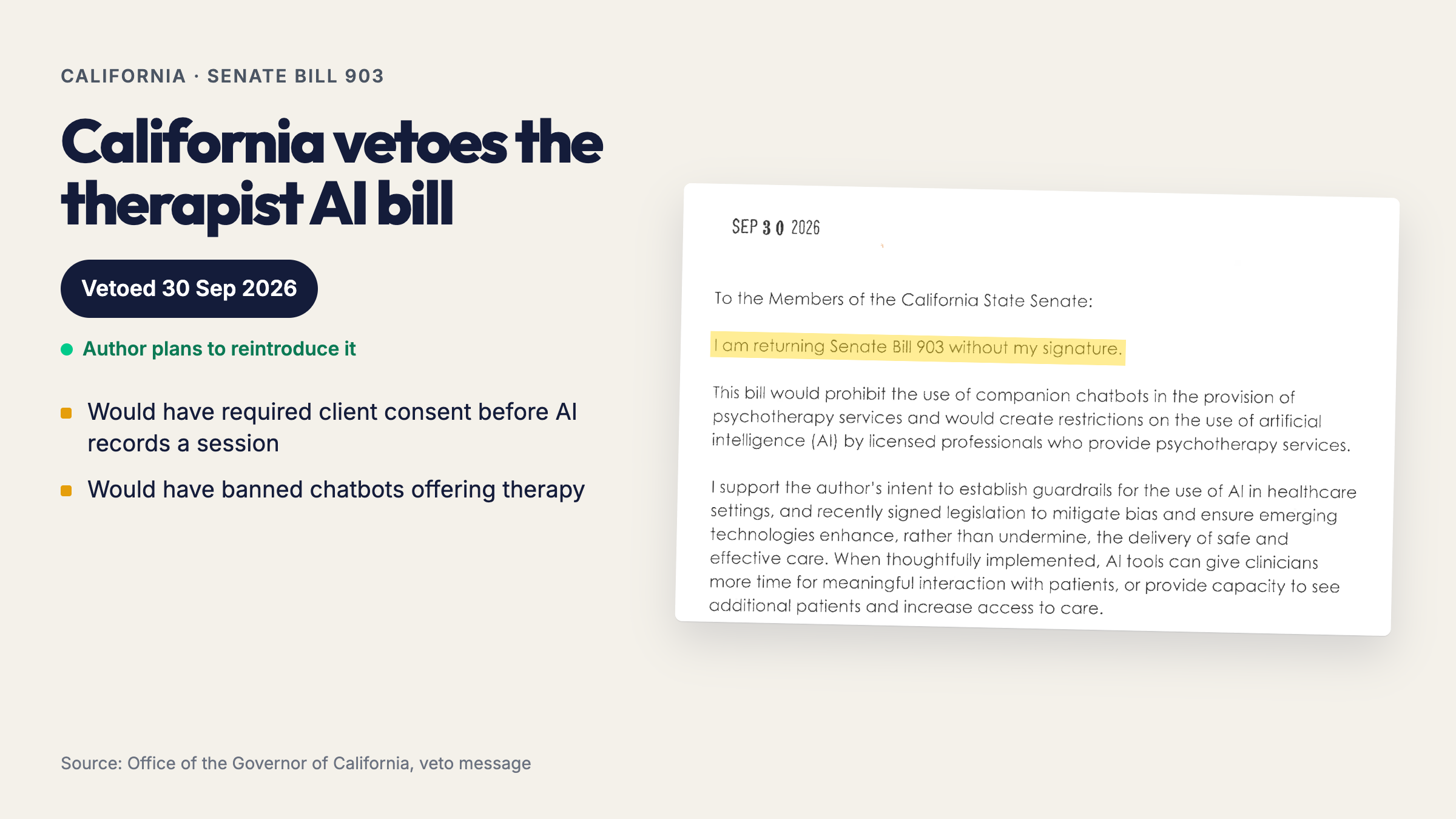
On 30 September 2026, Governor Gavin Newsom returned SB 903 unsigned. The bill would have barred companion chatbots from offering or advertising therapy in California, limited licensed professionals to administrative or supplementary AI use, and required disclosure and client consent before AI recorded or transcribed sessions. It passed the Senate unanimously and the Assembly 71 to 4.
On 1 October, the bill's author said he plans to reintroduce it. Near unanimous support in both chambers signals where lawmakers in other states are likely headed too. Practices using AI note takers, screeners, or chatbots should treat this as an early warning rather than a dismissed idea.
Do this now:
- List every AI tool your practice uses for notes, screening, or scheduling.
- Add a simple disclosure and consent step before any AI records or transcribes a session.
- Watch for similar bills in your own state over the next several months.
Google's September spam update is done. Check Search Console now
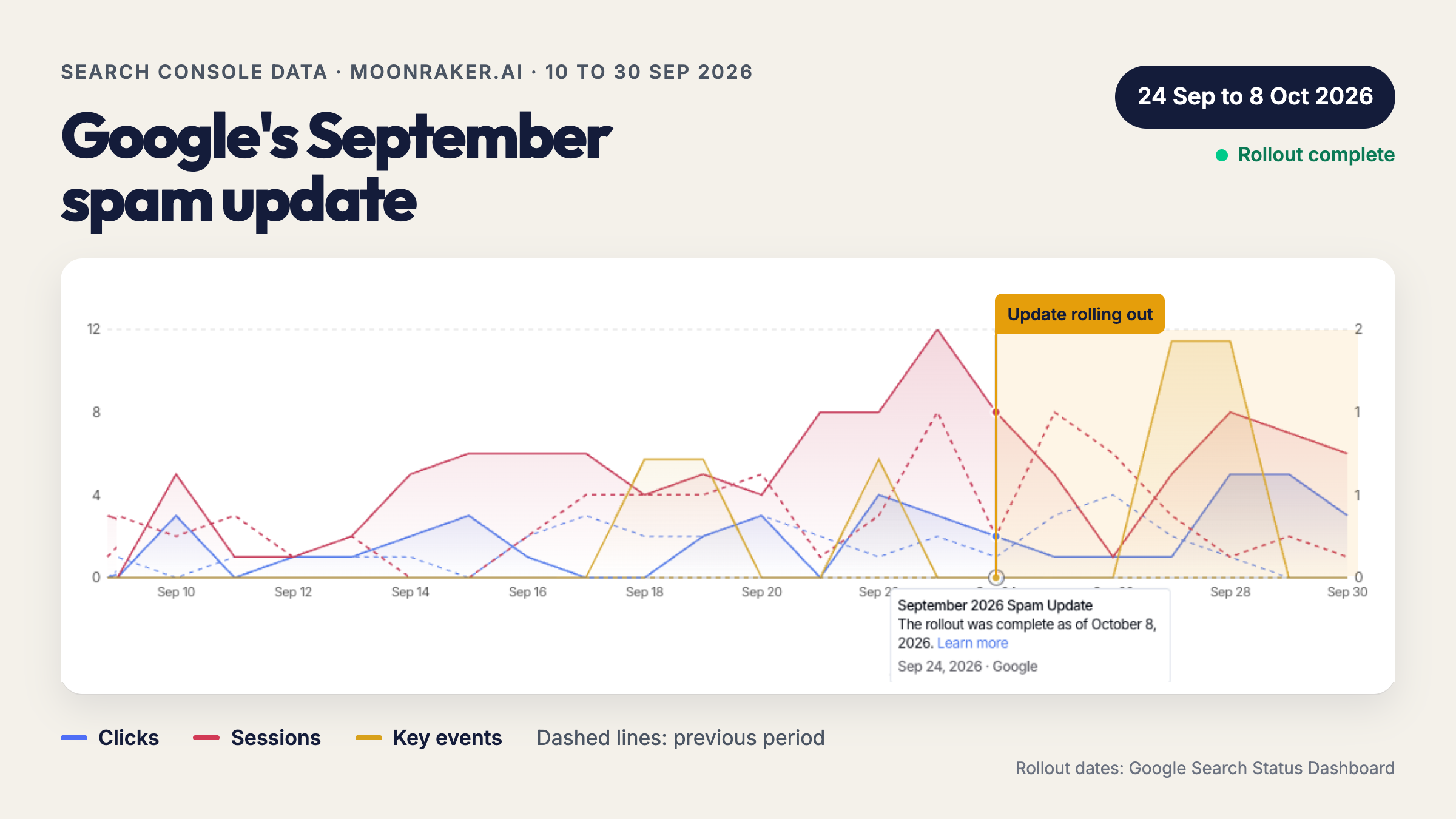
Google's September 2026 spam update began rolling out on 24 September 2026 and finished on 8 October 2026, applying globally and across all languages, according to Google's Search Status Dashboard. Google advises sites that notice changes to review its spam policies, and notes that recovery can take months as automated systems confirm compliance.
Edition 48 flagged the start of this update. Now that it is complete, comparing your Search Console traffic from before 24 September to after 8 October gives you a real signal rather than normal week to week noise. This is the window to spot genuine impact.
Do this now:
- Open Search Console and compare traffic from before 24 September to after 8 October.
- Review Google's spam policies if you see a drop and adjust any flagged pages.
- Recheck your numbers again in a month since recovery can take time.
Canada tightens rules for recording client calls
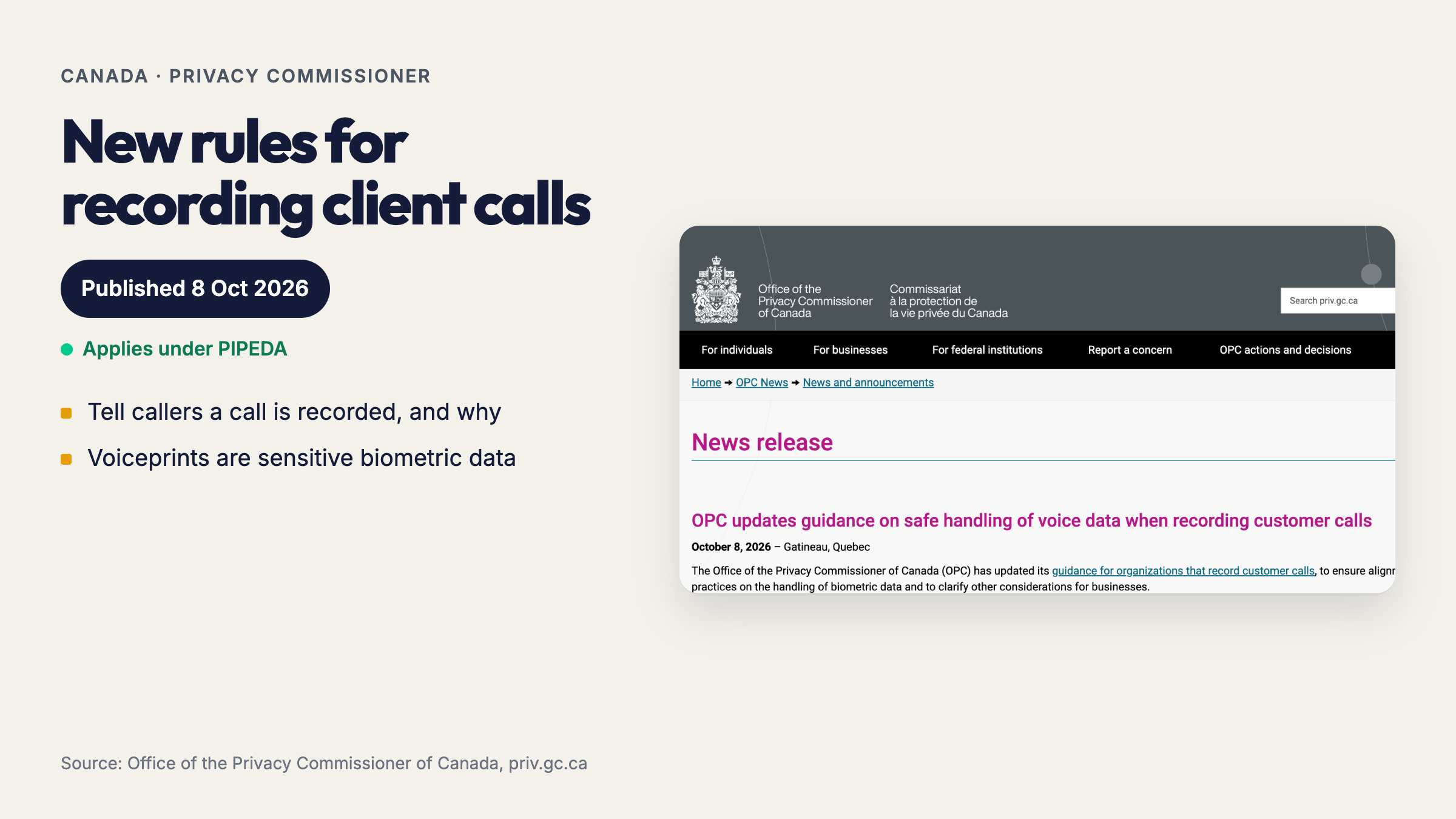
On 8 October 2026, Canada's Office of the Privacy Commissioner updated its guidance for organizations that record customer calls, aligning it with best practice for biometric data. Organizations covered by PIPEDA must tell callers a call is being recorded and why, offer an alternative when recording is not essential to the service, and ensure any outsourced call service follows the same rules. Voiceprints count as sensitive biometric information, and express consent may be required.
The guidance does not mention AI receptionists by name, but any practice using one to answer or screen calls should read these new rules as applying directly, since a first call to a therapist often includes sensitive details.
Do this now:
- Add a clear recording disclosure at the start of every intake or answering line.
- Confirm your answering service or AI receptionist follows the same consent rules.
- Offer callers a non-recorded way to reach your practice if recording is not essential.
Quick wins for the week
- Start Moonraker Academy's free course today and check spam for the welcome email from scott@moonrakeracademy.com.
- Search ChatGPT for therapists in your city to see how your practice currently shows up.
- Compare your Search Console traffic from before 24 September to after 8 October to see if the spam update affected you.
- Add a recording disclosure to your intake line if you use an answering service or AI receptionist.
Final thoughts
This edition shows the same pattern we keep seeing: the tools and rules around how clients find and contact you are shifting faster than any one practice owner can track alone. A free course can fix your website, but only if you measure it correctly. ChatGPT ads will dodge sensitive searches, but that just raises the stakes for showing up organically. Lawmakers are circling AI use in sessions, and call recording rules are tightening even for simple answering lines.
None of this is optional homework you can skip, but none of it should fall entirely on you either. While you're providing therapy, we're monitoring policy changes, protecting your Google presence, and optimizing for AI search. You shouldn't need to become an SEO expert, compliance specialist, and tech strategist on top of being a therapist.
Get the next edition in your inbox
One email a week on Google, AI search, and running a visible therapy practice. No fluff, unsubscribe anytime.