Why Month Two of SEO Often Looks Worse Before It Gets Better
Clicks dip, positions wobble, and the report looks like the work is going backward. The month-two dip is a normal stage of fixing a website, and here is how to tell a healthy dip from a real problem.
Here is the part of SEO almost nobody tells therapists up front: month two often looks worse than month one. Clicks dip, positions wobble, and the report you get looks like the work is going backward. It is not. The dip is a normal, predictable stage of fixing a website, and knowing why it happens is the difference between staying the course and firing a provider right before the results arrive.
What the dip actually is
When real foundation work starts on a therapy website, a lot changes at once: page structure gets rebuilt, titles and descriptions get rewritten, services get split onto their own pages, redirects go in, and your practice details get standardized everywhere Google checks.
Google's response to that much change is not instant reward. It is re-evaluation. The old versions of your pages fall out of the index while the new versions earn their place, and while that handover happens, rankings float. Measured week by week, that floating often reads as a decline.
Think of it like renovating your office while staying open. For a few weeks there is dust, and the waiting room looks worse than before the work started. Nobody concludes the renovation failed.
What it looks like in real numbers
One practice on our roster started their campaign at 29 Google clicks a month, which is functionally invisible. Month two dropped to 20 while the foundation fixes reindexed. Month three inflected to 116. Month four reached 295, ten times where they started, with six times the impressions.
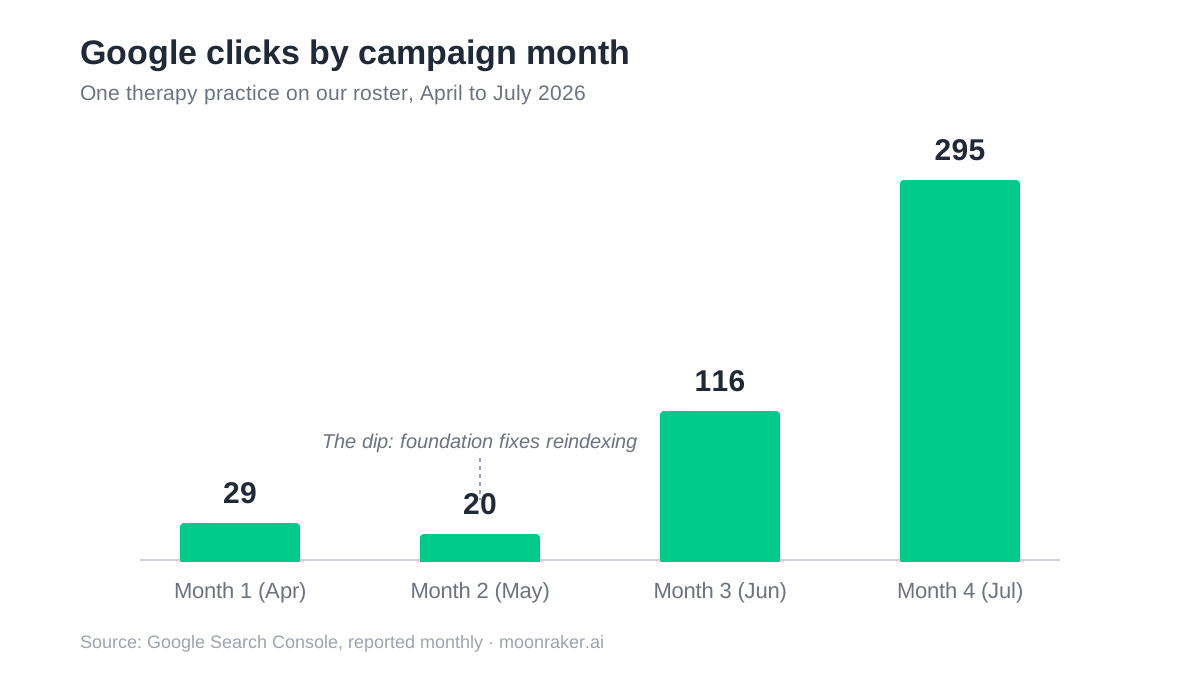
If they had judged the campaign at week six, they would have judged it at its lowest point. That shape, flat, dip, inflection, compounding, is the shape we see over and over, and it is why our engagements run in 90-day blocks: the first block covers a full trust cycle, so you judge the work on real movement instead of on the dust.
How to tell a healthy dip from a real problem
A healthy dip has three signatures. Impressions hold or grow while clicks wobble, meaning Google is still showing you, just re-testing where. The dip follows visible work, structural changes, new pages, redirects. And it recovers within four to eight weeks, usually inflecting past the old baseline.
A real problem looks different: impressions collapsing along with clicks, no work shipped that would explain it, or a slide that keeps sliding past week eight. That deserves diagnosis, not patience. The honest timeline for the whole arc is in our how long SEO takes guide.
Why we show the dip instead of hiding it
Monthly reports that only ever go up are one of two things: lucky, or edited. We report the dip and label it, because the alternative, a client discovering it themselves and losing trust in every number that follows, costs far more than an awkward month two.
That is also why anyone promising page one in weeks deserves suspicion. Skipping the re-evaluation cycle is not a service anyone can sell. What can be sold is either a keyword nobody searches, or a shortcut Google eventually punishes, and a licensed professional should not be anywhere near the second one. Our SEO for therapists guide covers what the legitimate work actually is.
The takeaway
If your site is in month two and the graph dipped: check impressions, check that work actually shipped, and hold. If you are choosing a provider: ask them to show you a real campaign's month-by-month numbers, dip included. The ones who show it are the ones you can trust with the recovery.
If you want a straight read on where your practice stands before any of this starts, that is what a free strategy call is for.
And if you are wondering how common the underlying problems are: our September 2026 AI Invisibility Index, a study of 984 therapy practice websites across all 50 states, found 78% fail basic AI readability. The dip is survivable. Invisibility is the thing to fix.
Frequently asked questions
Large structural changes send Google into re-evaluation: old page versions fall out of the index while new ones earn their place, and rankings float during the handover. Measured weekly, that reads as a dip even when the work is on track.
A healthy re-evaluation dip typically recovers within four to eight weeks and then inflects past the old baseline. A slide that continues past week eight, or impressions collapsing along with clicks, deserves diagnosis rather than patience.
Three signatures separate them: in a healthy dip impressions hold or grow while clicks wobble, the dip follows visible structural work, and it recovers within about two months. A real problem shows collapsing impressions, no work that explains the change, or no recovery.
One email a week on Google, Maps and AI search for therapy practices
What changed, what it means for your practice, and the one thing to do about it. Unsubscribe any time.