AI visibility, HIPAA and a clearer practice website
New crawler controls, a HIPAA enforcement lesson, and what recent research says about human support. Plus two practical website checks.
Blocking AI training does not have to mean disappearing from search
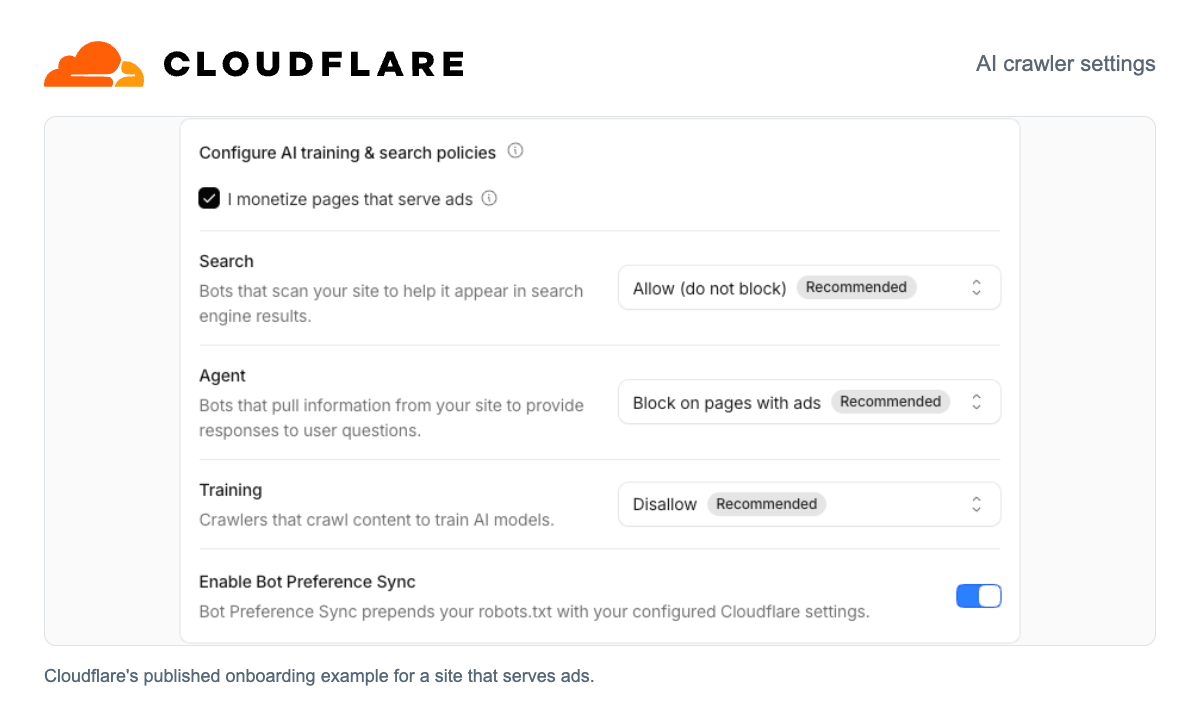
Cloudflare introduced new crawler controls on 15 September, separating a question practice owners often treat as one decision: can a service find your website, and can it use your content for AI training?
The new Disallow AI Training setting is designed to preserve search access while expressing or enforcing training restrictions, depending on the crawler. Choosing Block can also stop certain search crawlers. Support varies between providers, so this is not a guarantee that every form of AI use stops.
For a therapy practice using Cloudflare, the useful step is to review the actual settings with whoever manages your website. Existing preferences are generally migrated automatically. You do not need to switch everything off because a headline says AI bots are changing.
Read Cloudflare's announcement.
Do this now:
- Ask your website provider whether Cloudflare manages your crawler settings.
- Review search access and training preferences as separate decisions.
- Verify important pages remain accessible after changing a crawler rule.
A new HIPAA settlement puts everyday access controls back in focus
HHS announced a $700,000 HIPAA settlement on 17 September following a phishing incident discovered in 2020. An employee email account was compromised, potentially exposing protected health information relating to 225,370 people.
The investigation identified potential failures involving risk analysis, removing access when it was no longer appropriate, and assigning individual user identities in systems containing electronic protected health information. The settlement includes a corrective action plan monitored for two years.
This is a new enforcement announcement, not a new HIPAA rule. For a covered therapy practice, it is a useful prompt to review how staff access email and other systems, how accounts are closed when someone leaves, and whether your risk assessment reflects the tools you actually use.
Do this now:
- Review individual staff accounts for systems containing protected health information.
- Confirm your offboarding process removes access when a team member leaves.
- Review your documented risk analysis and phishing training with your privacy or security lead.
This week: more AI use, a strong preference for human support
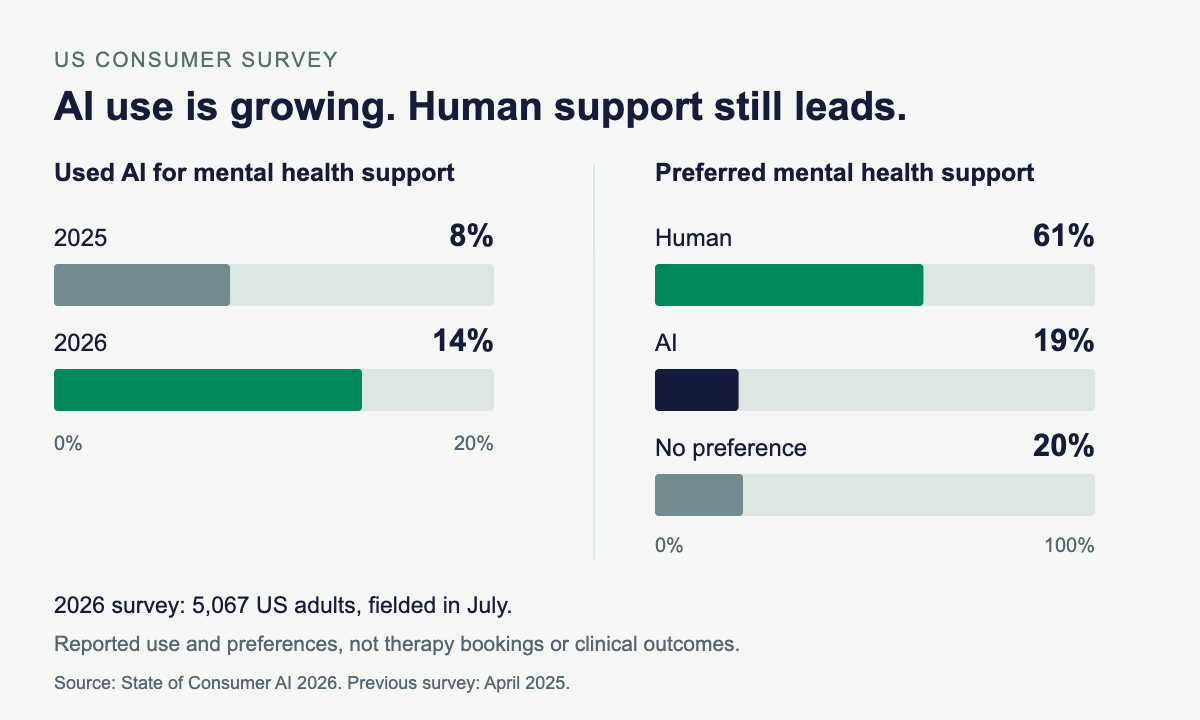
A US survey released on 16 September offers a useful perspective for therapists. Among 5,067 adults surveyed in July, reported use of AI for mental health support rose from 8% in the previous survey to 14%. When asked about their preference, 61% chose human mental health support, compared with 19% choosing AI.
These figures describe reported use and preferences. They do not measure therapy bookings or show how people choose a therapist.
My takeaway for practice owners: make your human expertise easy to understand online. Explain who you help, your qualifications, where you offer sessions and what someone can expect when they contact you.
Do this now:
- Make your specialties and the people you work with clear on your main service pages.
- Check that your location, online therapy availability and credentials are accurate and easy to find.
- Explain what happens after someone sends an inquiry so the first step feels less uncertain.
Can search engines read the website your clients see?
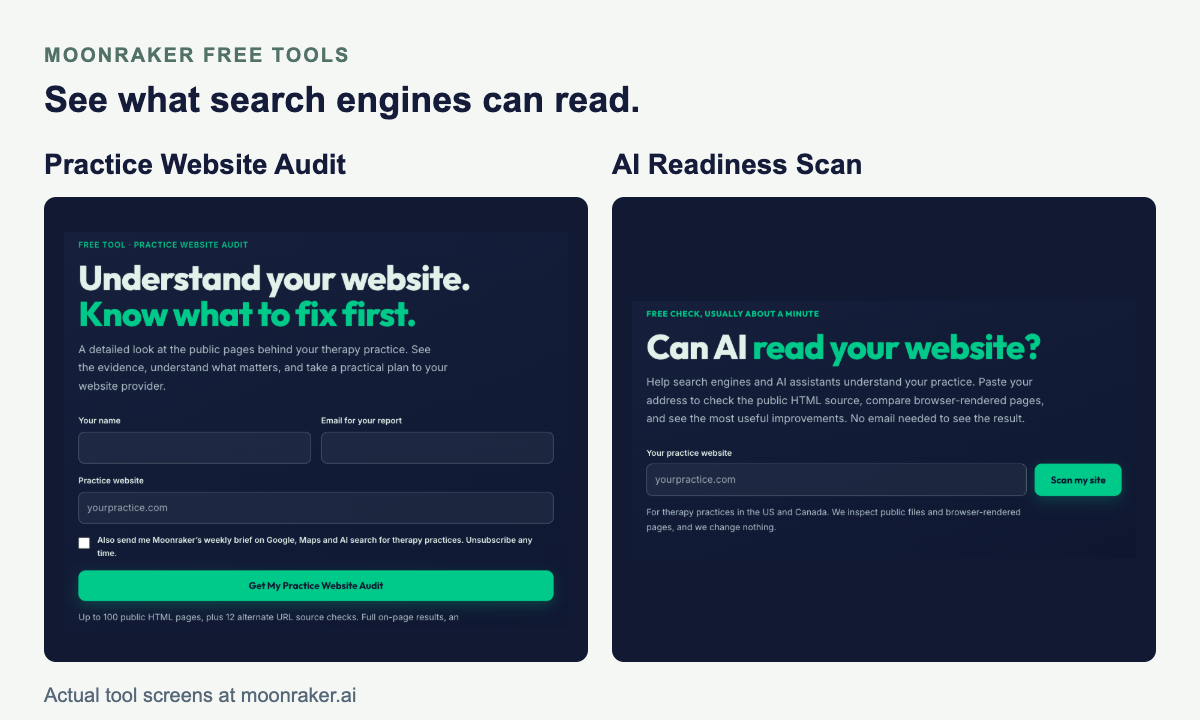
A website can look clear while leaving automated systems with an incomplete picture. Our new Practice Website Audit examines the wider public website, including page source, navigation and indexing instructions. The AI Readiness Scan offers a focused check of public crawler access and machine-readable practice information.
Use the findings to identify something worth improving, then inspect the affected page. Neither tool proves that Google ranks your practice or that an AI assistant recommends it.
Do this now:
- Choose the broader audit or the focused scan for your question.
- Open the evidence behind one priority finding.
- Discuss the finding with your website provider before making changes.
Does your next article fill a gap or repeat a page?
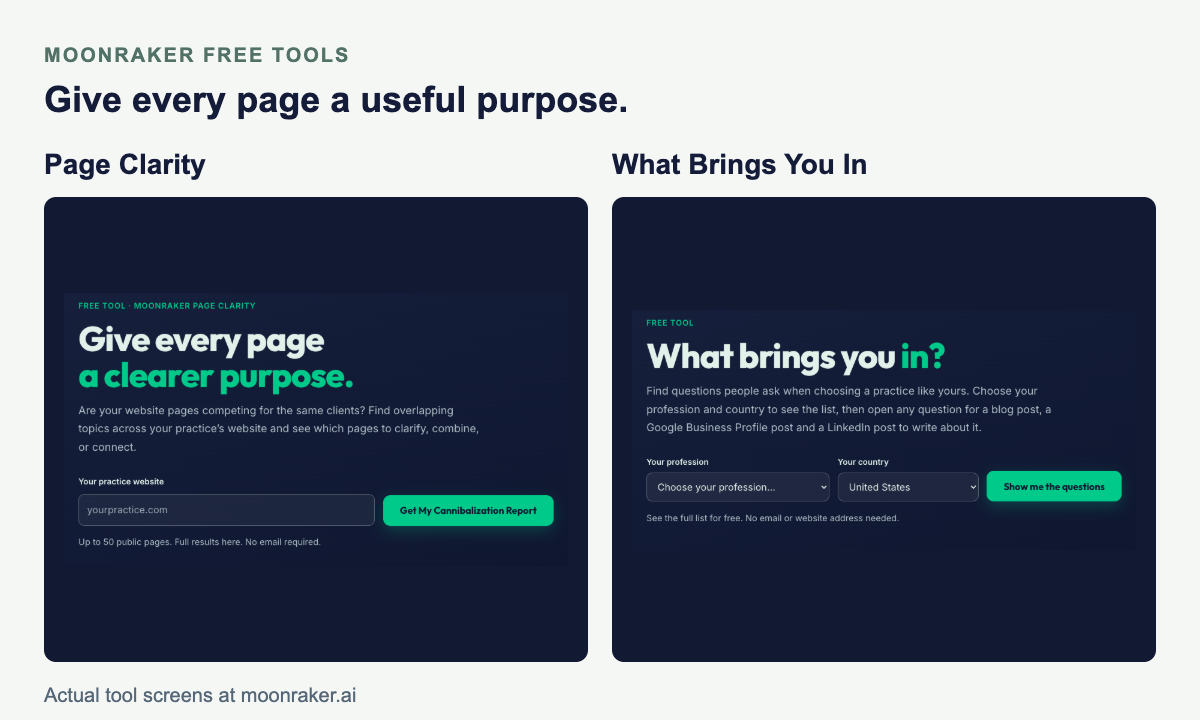
Before writing another article about anxiety, review what your website already covers. Our new Page Clarity tool flags potential overlap, while What Brings You In suggests questions worth exploring.
Together, they help you decide whether to improve an existing page or answer a different question. Add useful explanations from your professional expertise, without using private client details. An overlap flag is a reason to investigate, not proof that pages are competing in search.
Do this now:
- Compare any flagged pages and identify their distinct purposes.
- Choose a useful question your website has not answered clearly.
- Check search evidence before combining or removing existing pages.
Final thoughts
The thread running through this week's stories is trust. People need to find your practice, understand who you help and feel confident about taking the next step. The technology behind your website should support that experience.
Start with one practical question: can someone quickly see your specialties, qualifications, location and what happens after an inquiry? Then look behind the page. Check that search engines can access the information you want public, and that staff access to private information is reviewed when roles change.
For content, more pages are not automatically more helpful. A clear explanation of your approach, a thoughtful answer to a common question or an improvement to an existing service page can give someone a stronger reason to reach out. Bring your professional perspective to those explanations while protecting client confidentiality.
Choose one improvement you can make this week and check whether it solved the problem you identified. If there is a confusing finding or a question you would like us to explore in a future edition, reply to this email. I would like to hear what you are seeing in your practice.
Get the next edition in your inbox
One email a week on Google, AI search, and running a visible therapy practice. No fluff, unsubscribe anytime.