Why clients are searching "CBT vs. EMDR" (and not "Therapist near me")
This week: OpenAI launches "ChatGPT Health" (and what it means for you); Search Trend Shift: Patients are asking "Which is better?" (And how to rank for it); Google kills "Live Video Call" verification; mandates "Continuous Take"
OpenAI launches "ChatGPT Health" (and what it means for you)
On January 7, 2026, OpenAI officially launched "ChatGPT Health," a dedicated, HIPAA-supported environment within the platform. This new update allows users (your clients) to connect their Apple Health data and even electronic medical records (EHRs) directly to ChatGPT to get personalized health insights.
For therapists, this signals a massive shift: clients will now arrive at sessions armed with AI-generated summaries of their sleep, anxiety trends, and "diagnoses." While the Enterprise version of this tool is HIPAA-compliant, the standard version your clients use is a privacy minefield if they share your clinical notes with it.
👉 Action: Update your "Digital Media Policy" to address this immediately. Explicitly advise clients that while they can use AI for self-reflection, uploading your clinical summaries or secure messages into their personal ChatGPT account puts their privacy at risk. Be prepared to discuss "AI second opinions" in sessions starting this month.
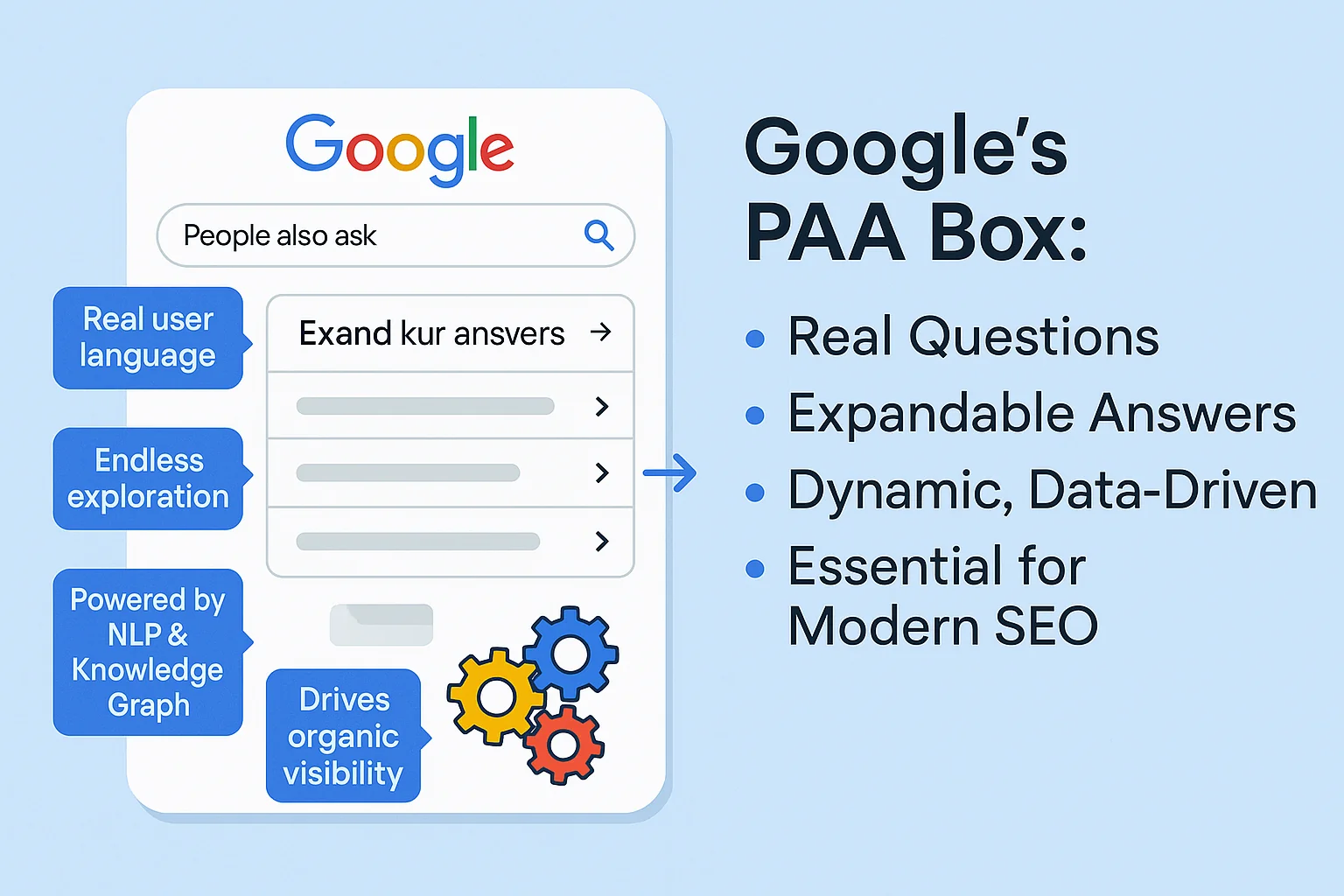
Search Trend Shift: Patients are asking "Which is better?" (And how to rank for it)
Data from January 2026 reveals a distinct shift in how potential clients find therapists. Instead of the traditional "therapist near me" search, users are increasingly using "Middle of Funnel" comparison queries like "CBT vs EMDR for trauma" or "What does somatic therapy feel like?" before they ever look for a provider.
This shift is driven by AI: clients are using tools like ChatGPT to research modalities first. If your website only lists general descriptions, you are invisible to these searches. To capture this traffic, you must turn your service pages into "Answer Engines" that feed Google's new "BlockRank" architecture, a system where AI scans specific "blocks" of text to find answers.
👉 Action: Update each specific service and modality page (e.g., your "Trauma" page, your "Anxiety" page) with a dedicated section containing 10 specific FAQs. To find the right questions, use Google's "People Also Ask" feature (or a tool like AlsoAsked.com). Search for your main keyword (e.g., "EMDR therapy city"), look at the "People Also Ask" box, and click the questions to expand the list. Select the top 10 most relevant comparison or definition questions. Format each as an H2 Header followed by a 40-50 word direct answer. This density of structured Q&A maximizes your chance of being cited by AI search tools.

Google kills "Live Video Call" verification; mandates "Continuous Take"
Reports confirm that Google has effectively removed the "Live Video Call" option for most therapy practices attempting to verify their profile. The default, and only method is the "Mobile Video Upload."
Rejection rates are high. Google's AI is automatically rejecting videos that are too short (under 30 seconds) If your profile is suspended or requires re-verification, failing this video step can lock you out of your listing for weeks.
👉 Action: If triggered for verification, do not attempt the video until you are ready. Script a 60-second continuous path: Start at a street sign then show your location, show yourself walking into your building, show yourself walking into your space, add physical signage that is prominent to your physical location ie, on your door or building if you own the building, unlock the door with a key (critical proof of access), and walk into your office. Upload immediately.

Google's "AI Overviews" face backlash for bad health advice
A major investigation published on January 11, 2026 (by The Guardian and others) has forced Google to scale back some AI health summaries after they provided "dangerous and alarming" medical advice. The AI struggled with nuance, often failing to distinguish between standard medical advice and specific conditions (e.g., liver test results).
This volatility creates a massive "Trust Gap" for therapists. Google's algorithm is now actively prioritizing content that demonstrates "Human Experience" to correct the AI's mistakes. Content that sounds clinical and generic (like the AI) is being demoted; content that uses "I statements" and clinical vignettes is ranking higher.
👉 Action: Audit your top blog post. Add a "Clinician's Note" box at the top that says: "From my experience treating 50+ patients with [condition], here is what is often misunderstood..." This specific signal showing human experience that an AI cannot fake is currently an incredible SEO lever you have.

Google Gemini now HIPAA-ready for Workspace users
In a major update for practice productivity, Google confirmed this week that Gemini for Workspace (the paid enterprise version) is now covered under the standard BAA (Business Associate Agreement). This effectively makes Gemini a HIPAA-compliant option for drafting letters, summarizing notes, or organizing administrative data, if configured correctly.
This does not apply to the free personal version of Gemini. Using the free version with patient data remains a HIPAA breach.
👉 Action: If you have a paid Google Workspace account, go to the Admin Console. Navigate to Generative AI > Settings. Accept the new BAA terms and crucially ensure the setting "Allow human reviewers to improve models" is turned OFF. This prevents Google staff from ever seeing your data.
Quick wins for the week
- Use "People Also Ask" to generate 10 specific FAQs for each of your service pages.
- Add a "Clinician's Note" to your most popular page to signal "Human Experience" to Google.
- Update your consultation script to ask clients if they've used ChatGPT to research their symptoms.
- Locate your office keys and identify a nearby street sign in case Google demands a video verification.
- Turn off "Model Training" in your Google Workspace settings before using Gemini for any practice admin.
Final thoughts
This week's news confirms that the "Information Age" is becoming the "Verification Age." Your clients are drowning in AI generated health summaries, some of which, as we saw with Google's recent stumble are inaccurate or dangerous. They are searching for comparisons ("Is CBT right for me?") because they want to feel empowered before they commit to vulnerability.
This is your opportunity. You don't need to compete with AI on speed; you win by competing on structure and nuance. By formatting your answers so machines can read them (BlockRank) but writing them so humans can feel them (Experience), you build a bridge of trust that no algorithm can cross.
While you're providing therapy, we're monitoring policy changes, protecting your Google presence, and optimizing for AI search. You shouldn't need to become an SEO expert, compliance specialist, and tech strategist on top of being a therapist.
Get the next edition in your inbox
One email a week on Google, AI search, and running a visible therapy practice. No fluff, unsubscribe anytime.