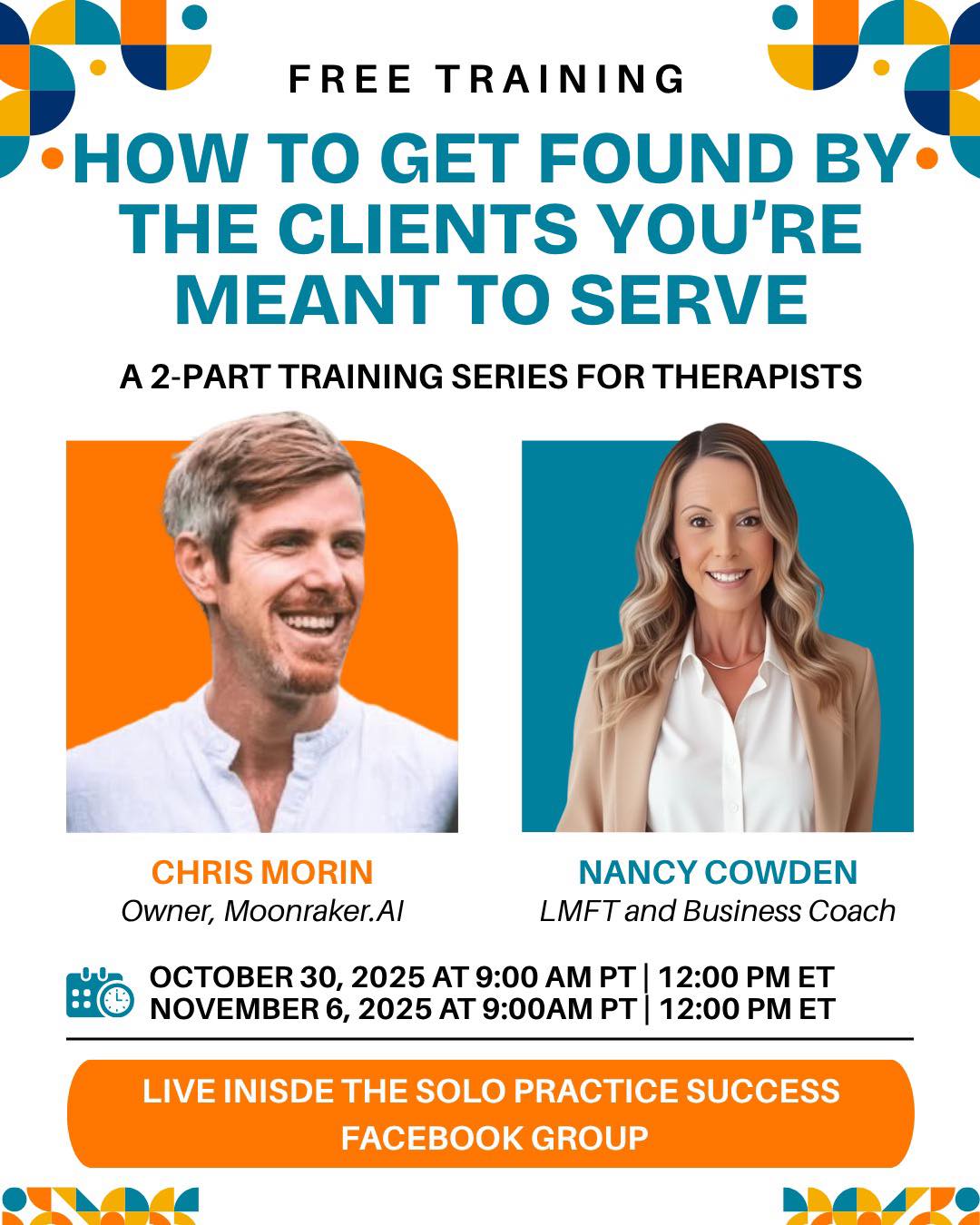
🎓 Free Training: Part 2 Nov 6 | + 5 Urgent Updates
This week: New York's AI chatbot law is now in effect compliance is mandatory immediately; Google Business Profile review counts displaying incorrectly, bug affecting thousands of practices; Doxy.me outage on October 20-21 shows the fragili
New York's AI chatbot law is now in effect compliance is mandatory immediately
New York's AI companion regulation is now in effect as of November 5, 2025. If you practice in New York or serve New York clients remotely, compliance is mandatory immediately. The law requires AI systems to detect suicidal ideation and self-harm, automatically refer users to crisis resources (988, Crisis Text Line), and provide AI disclosure reminders every three hours for minors. This joins five other states with active AI restrictions, creating a patchwork of compliance requirements. Illinois carries $10,000 penalties per violation; California allows private lawsuits for $1,000 per violation each.
If your practice uses appointment chatbots, intake assistants, website chat widgets, or any automated system that could interact with mental health inquiries, you're potentially affected. Failure to redirect someone expressing self-harm thoughts to crisis resources violates the law. The enforcement risk is real and immediate.
👉 Action: If you serve New York clients, audit all AI tools today: chatbots, website forms, telehealth platform chat features, scheduling systems. Verify crisis detection and referral protocols are enabled. Update patient consent forms with AI disclosure language. Contact third-party vendors (Calendly, Acuity, telehealth platforms) to confirm New York compliance. Document everything. If you don't use AI chatbots, verify your website forms don't auto-respond with mental health advice.

Google Business Profile review counts displaying incorrectly, bug affecting thousands of practices
On October 27, Google acknowledged a widespread bug causing review counts to display lower than actual on thousands of Google Business Profiles. Your actual reviews remain intact, but potential patients see artificially deflated numbers when searching for therapists. For example, a practice with 37 real reviews might display as showing only 12 destroying competitive advantage during patient booking decisions. The bug remains unresolved with no published resolution timeline.
You can't fix this yourself because it's a server-side Google issue. Clearing cache or reoptimizing your profile won't help. The only option is monitoring, reporting, and hoping Google prioritizes your resolution.
👉 Action: Check your Google Business Profile today. Compare your actual backend review count to what displays publicly. If there's a discrepancy, screenshot both and report at support.google.com/business/contact. Monitor your lead volume and conversion rates this week if they drop, document it for Google. Encourage satisfied recent clients to leave reviews organically (no incentives) to rebuild visibility.

Doxy.me outage on October 20-21 shows the fragility of telehealth infrastructure
On October 20-21, 2025, Doxy.me experienced a 24-hour outage. AWS infrastructure failures cascaded into complete platform dysfunction: providers couldn't sign in, clients couldn't access sessions, file uploads failed, and the entire service became inaccessible during critical business hours. For therapists relying on Doxy.me for telehealth, this meant no sessions conducted, no client file access, no appointment visibility, and revenue stopped cold. The outage exposed a critical vulnerability: your client's depend on multiple layers of third-party systems (Doxy.me, AWS, internet providers) completely outside your control. When any layer fails, your entire practice stops.
For solo and small group practices, this risk is acute. If Doxy.me is your only telehealth platform, you have no backup. Unlike large health systems with redundant infrastructure, most therapy practices are vulnerable to exactly this type of cascade failure.
👉 Action: Identify and set up a backup telehealth platform immediately (Zoom, Google Meet, SimplePractice, Thera-Link, etc.). Test it with one real session this week. Document your backup procedures in writing: which platform you'll use if Doxy.me is down, how you'll notify client's, how you'll access clinical records. Ensure client information is backed up outside Doxy.me. Update intake forms mentioning your backup platform so client's know contingencies exist.

Google rolls out Query Groups feature, see actual patient search patterns, not keyword chaos
On October 27, Google announced Query Groups, a new feature in Google Search Console that clusters similar search queries into meaningful groups. Instead of seeing 50+ fragmented keyword variations ("therapist near me," "find a therapist," "mental health counselor," "online therapy," etc.), you now see grouped performance metrics showing total clicks per group and performance tiers: top performing, trending up, and trending down. This directly reveals actual patient search intent patterns and eliminates keyword clutter.
The feature rolls out gradually to high-volume properties, so you may not see it yet. When it arrives, it will transform how you understand patient discovery and optimize your website strategy.
👉 Action: Check Google Search Console regularly for Query Groups availability. When it appears, analyze your top performing query groups. Which patient search intents drive most traffic? Create content around highest-traffic and trending-up groups. Export data monthly to track seasonal patterns and emerging search opportunities. Compare high-traffic groups to conversion metrics, do they actually turn into patients?

Google Local Service Ads now display reviews and overview buttons improve conversion directly from ads
On October 29, Google announced testing of reviews and overview buttons appearing directly within Local Service Ads. Previously, patients could click your LSA and reach your profile, but couldn't see reviews or ratings before calling. Now Google is testing the ability to view your review count, star rating, and business overview directly from the ad unit without clicking through first. This removes friction from the patient decision journey by providing social proof at the first interaction point.
For healthcare providers using LSAs, this enhancement is significant. Patients searching "therapist near me" or "mental health counselor" can now see your 4.8-star rating directly in the ad, giving competitive advantage over profiles without visible reviews at that stage. The feature is in testing phase with broader rollout likely coming soon.
👉 Action: If you run LSAs, review current performance metrics (click-through rate, conversion rate). After feature rollout, monitor whether performance improves due to visible reviews. If you don't use LSAs but have 4.5+ star reviews, consider testing LSA campaigns and asking colleagues for reviews. Mental health services qualify in most areas. Review LSA verification requirements, if they fit your practice, test LSA campaigns to capture high-intent patient searches.
Quick wins for the week
- Audit all AI tools and chatbots today for New York compliance document crisis detection and referral capabilities
- Check your Google Business Profile review count discrepancy and report display bug to Google if affected
- Set up a backup telehealth platform immediately and test it with one practice session this week
- Log into Google Search Console and enable Query Groups notifications to track emerging patient search patterns
- Evaluate Local Services Ads if you have strong reviews test LSA campaigns to capture high-intent patient searches
Final thoughts
This week brought five distinct challenges that therapists are facing right now. New York's AI compliance law is now mandatory. Google's review display bug is actively tanking your credibility with no resolution timeline. Doxy.me proved your telehealth infrastructure is one failure away from complete revenue stoppage. Meanwhile, Google rolled out two new features (LSA reviews and Query Groups) demanding immediate optimization. These aren't sequential problems you can address one at a time, they're simultaneous crises requiring simultaneous responses.
The pattern is clear: your therapy practice runs on platforms you don't control, subject to policies that change without warning, vulnerable to bugs you can't fix, dependent on infrastructure that fails unpredictably. A state passes an AI law and you must comply immediately. A platform bug costs you visibility. A third-party service goes down and your revenue stops. New features launch requiring optimization effort. The complexity isn't decreasing, it's multiplying exponentially. This is exactly why therapists need a partner handling this complexity.
While you're providing therapy, we're monitoring platform stability, tracking compliance deadlines, identifying optimization opportunities, and protecting your digital infrastructure. You shouldn't need to become a tech ops specialist, compliance expert, and SEO strategist on top of being a therapist.
Get the next edition in your inbox
One email a week on Google, AI search, and running a visible therapy practice. No fluff, unsubscribe anytime.